

Skip to product information
1 of 4

COMPOUNDED SEMAGLUTIDE + B6

Regular price
$219
Regular price
$0
Sale price
$219

Pricing is for a monthly supply. Prescription medication. Medical evaluation required.

What it is

Semaglutide + B6 is a GLP-1 receptor agonist, meaning it mimics a hormone your body naturally produces (glucagon-like peptide-1) that helps regulate appetite, blood sugar, and how full you feel after eating. By extending and amplifying the GLP-1 signal, semaglutide helps slow gastric emptying, reduce appetite, and improve insulin response.

Semaglutide is one of the most widely studied GLP-1 medications and remains a foundational option for medical weight management. Once weekly subcutaneous injection, gradually titrated by your provider.

Benefits patients commonly report

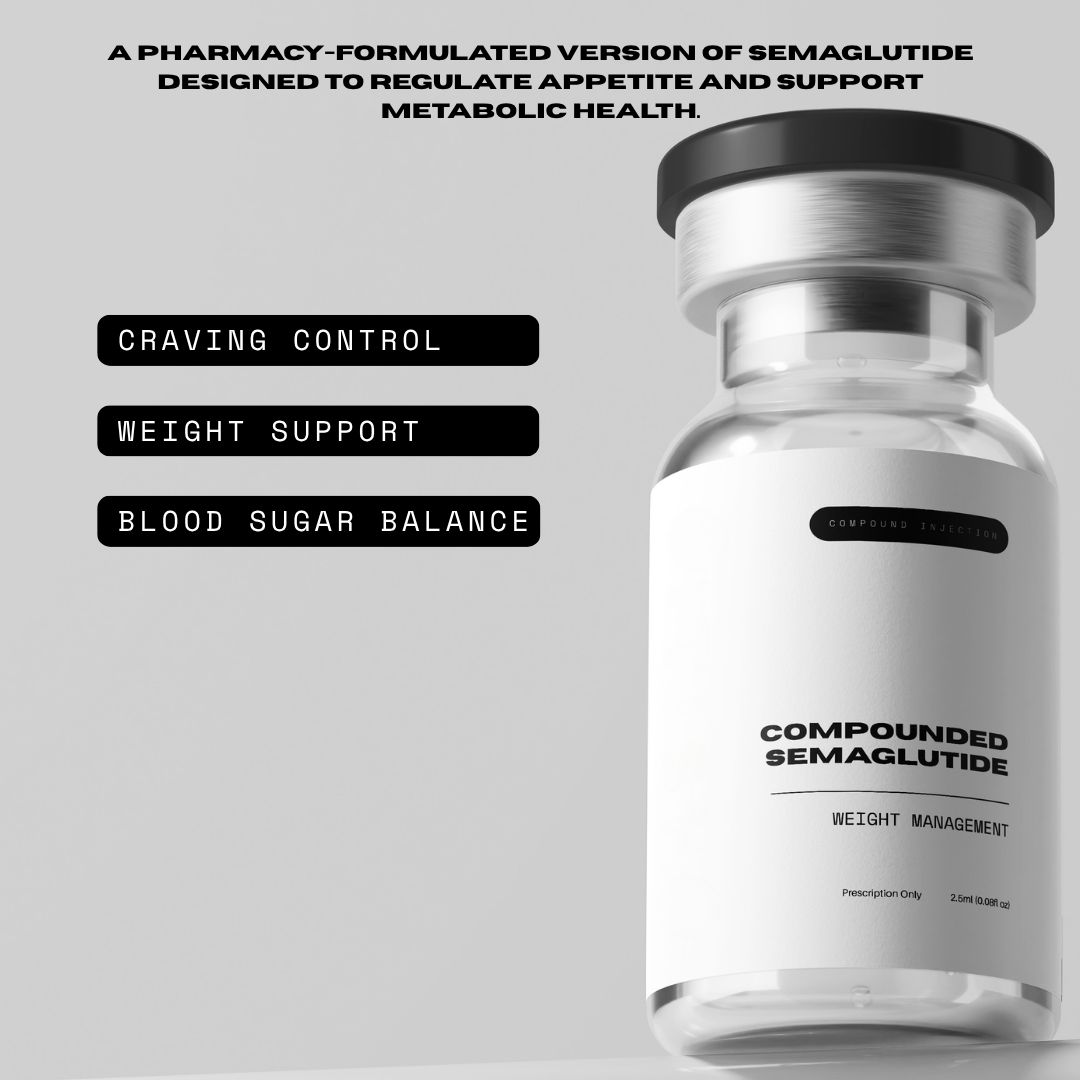
  • Reduced appetite and cravings
  • Slower digestion that supports prolonged satiety
  • Improved blood sugar regulation and metabolic health
  • Steady, sustainable progress when paired with lifestyle support
  • Lower reactivity to food cues and emotional eating triggers

A note on whole body wellness

As eating patterns become more consistent and hydration habits improve, many patients notice a steadier rhythm to their skin and overall energy.

What to expect

Appetite changes are often felt within the first 1 to 2 weeks. Weight changes typically become visible over 8 to 16 weeks with consistent use and supportive habits. The most commonly reported side effects are gastrointestinal (nausea, constipation, indigestion) and usually subside as your body adjusts.

Who it's for

Adults pursuing medical weight management whose BMI and medical history meet clinical eligibility criteria. A licensed Fitish provider reviews every intake.

How Fitish RX works

You complete a short online intake about your health and goals. A licensed provider reviews it, and if semaglutide is a fit, writes your prescription. Your medication ships from a licensed compounding pharmacy on a monthly cadence, and your care team stays with you through the patient portal for dose questions and support at no added cost.

Important to know

Compounded semaglutide is prepared by a state licensed sterile compounding pharmacy. Compounded medications are not FDA-approved and do not undergo FDA review for safety, effectiveness, or manufacturing quality. FDA-approved semaglutide products (Ozempic®, Wegovy®, Rybelsus®) are commercially available. Your provider may recommend compounded semaglutide where clinically appropriate based on your evaluation.

Full dose or microdose

Fitish RX offers two distinct GLP-1 lanes so you can match the program to your goal:

  • Compounded semaglutide (full dose), $219 / monthly supply. For patients pursuing serious, sustained weight management who meet clinical criteria.
  • Microdose semaglutide, $179 / monthly supply. A lower, fixed dose for those who want a gentle, mindful, cosmetic approach rather than full dose weight loss. It does not titrate up.

Both are provider led and ship monthly. If you are not sure which lane fits, complete your intake and your provider will recommend the right one.

These statements have not been evaluated by the Food and Drug Administration. Individual results vary. This product is not intended to diagnose, treat, cure, or prevent any disease.

Not a fit for compounded GLP-1? You may still qualify for our Microdosing program, a lower dose option designed for patients outside the standard BMI range. Eligibility for our compounded GLP-1 program is based on BMI and clinical criteria reviewed by a licensed provider. If your BMI falls below the threshold for compounded GLP-1, you may still be a candidate for our Microdosing program, a lower dose protocol built for patients seeking the metabolic, appetite, and longevity benefits of GLP-1 therapy at a gentler entry point. A provider will review your intake and recommend the program that fits your goals and health profile.

Learn more about Microdosing

Want the gentle lane explained? Read our guide to microdosing semaglutide, or compare starting doses side by side in the GLP-1 microdosing dose chart.

Frequently asked questions

What is compounded semaglutide?

Compounded semaglutide is semaglutide prepared by a state licensed sterile compounding pharmacy and dispensed by prescription. Compounded medications are not FDA-approved. It is used for medically supervised weight management when a licensed provider determines it is appropriate.

How much does compounded semaglutide cost at Fitish?

$219 for a monthly supply, including your provider consult, the medication if approved, and shipping. No separate consult or membership fees.

Do I need insurance?

No. Fitish RX is direct-pay telehealth with transparent, all-in pricing.

Can I pay with my HSA or FSA?

Sometimes. Some plans and cards will go through and others will not, and that part is largely outside our control. Card networks currently treat compounded telehealth prescriptions inconsistently, so an HSA or FSA card can be declined at checkout even when your plan would otherwise allow the expense. Eligibility is determined by your plan and your plan administrator, not by us. If you want to use those funds, the most reliable route is to check with your administrator first, pay with any other card, and submit for reimbursement. Your provider can issue a Letter of Medical Necessity to support that request.

How is it taken?

Semaglutide is a once weekly subcutaneous injection, gradually titrated by your provider and documented in your patient portal.

What are the most common side effects?

Gastrointestinal symptoms such as nausea, constipation, and indigestion are most common and usually subside as your body adjusts. Your provider reviews the full safety profile with you before you begin.

What if I do not qualify for full-dose semaglutide?

You may still be a candidate for the Fitish Microdosing program, a lower dose option for patients who want a gentler, cosmetic approach. Your provider recommends the right program after reviewing your intake.

New to GLP-1? Read our guide to weight loss shots and how they work.

For more detail, see The Clinic FAQ page or our Fitish RX Safety Information. The Black Box warnings, full side effect list, and drug interaction details remain in the Safety Details section below.

More

Semaglutide is a GLP-1 receptor agonist medication. Compounded semaglutide is custom-prepared by a state-licensed compounding pharmacy based on a prescription from a licensed provider. Compounded medications are not FDA-approved and are not reviewed by the FDA for safety, effectiveness, or quality. State-licensed compounding pharmacies follow both federal and state regulations, including quality standards.

FAQ
  • What is semaglutide? Semaglutide is a prescription medication that mimics a naturally occurring hormone called GLP-1, helping to regulate blood sugar, reduce appetite, and support weight loss.
  • How does semaglutide work for weight loss? It works by suppressing appetite, slowing stomach emptying, and improving insulin response, which can lead to reduced calorie intake and sustained weight loss.
  • Is semaglutide safe? When prescribed and monitored by a healthcare provider, semaglutide is considered safe for most people, but it may cause side effects like nausea or gastrointestinal discomfort.
  • What are the potential side effects of semaglutide? Common side effects include nausea, vomiting, diarrhea, and constipation. Rare but serious risks include pancreatitis and thyroid tumors.
  • Can I use semaglutide if I don’t have diabetes? Yes, semaglutide is approved for weight management in non-diabetic individuals under medical supervision, primarily for obesity or overweight adults with related health risks.
Safety Details

Compounded Semaglutide (Injection)
BLACK BOX WARNING: RISK OF THYROID C-CELL TUMORS

Semaglutide may cause serious side effects, including possible thyroid tumors, including cancer. Tell your healthcare provider if you get a lump or swelling in your neck, hoarseness, trouble swallowing, or shortness of breath. These may be symptoms of thyroid cancer. In studies with rodents, Semaglutide and medicines that work like Semaglutide caused thyroid tumors, including thyroid cancer. It is not known if Semaglutide will cause thyroid tumors or a type of thyroid cancer called medullary thyroid carcinoma (MTC) in people.

ABOUT COMPOUNDED MEDICATIONS

Compounded semaglutide is prepared by a state licensed sterile compounding pharmacy and is prescribed where clinically appropriate based on your medical evaluation. Compounded medications are not FDA-approved and do not undergo FDA review for safety, effectiveness, or manufacturing quality. Your provider determines your dose based on your medical evaluation. FDA-approved medicines containing semaglutide are commercially available.


Do not use Semaglutide if:

You or any of your family have ever had a type of thyroid cancer called medullary thyroid carcinoma (MTC) or if you have an endocrine system condition called Multiple Endocrine Neoplasia syndrome type 2 (MEN 2).

You have had a serious allergic reaction to semaglutide or any of the ingredients in Semaglutide.


Before using Semaglutide, tell your healthcare provider if you have any other medical conditions, including if you:

Have or have had problems with your pancreas or kidneys.

Have type 2 diabetes and a history of diabetic retinopathy.

Have or have had depression, suicidal thoughts, or mental health issues.

Are pregnant or plan to become pregnant. Semaglutide may harm your unborn baby. You should stop using Semaglutide 2 months before you plan to conceive.

Are breastfeeding or plan to breastfeed. It is not known if Semaglutide passes into your breast milk.


Tell your healthcare provider about all the medicines you take, including prescription and over-the-counter medicines, vitamins, and herbal supplements. Semaglutide may affect the way some medicines work and some medicines may affect the way Semaglutide works. Tell your healthcare provider if you are taking other medicines to treat diabetes, including sulfonylureas or insulin. Semaglutide slows stomach emptying and can affect medicines that need to pass through the stomach quickly.


What are the possible side effects of Semaglutide?


Semaglutide may cause serious side effects, including:
If you experience a medical emergency, call 911 or go to the nearest emergency room.

Inflammation of your pancreas (pancreatitis): Stop using Semaglutide and call your healthcare provider right away if you have severe pain in your stomach area (abdomen) that will not go away, with or without vomiting. You may feel the pain from your abdomen to your back.

Gallbladder problems: Semaglutide may cause gallbladder problems, including gallstones. Some gallstones may need surgery. Call your healthcare provider if you have symptoms, such as pain in your upper stomach (abdomen), fever, yellowing of the skin or eyes (jaundice), or clay-colored stools.

Increased risk of low blood sugar (hypoglycemia) in patients with type 2 diabetes, especially those who also take medicines for type 2 diabetes such as sulfonylureas or insulin: This can be both a serious and common side effect. Talk to your healthcare provider about how to recognize and treat low blood sugar and check your blood sugar before you start and while you take Semaglutide. Signs and symptoms of low blood sugar may include dizziness or light-headedness, blurred vision, anxiety, irritability or mood changes, sweating, slurred speech, hunger, confusion or drowsiness, shakiness, weakness, headache, fast heartbeat, or feeling jittery.

Kidney problems (kidney failure): In people who have kidney problems, diarrhea, nausea, and vomiting may cause a loss of fluids (dehydration), which may cause kidney problems to get worse. It is important for you to drink fluids to help reduce your chance of dehydration.

Serious allergic reactions: Stop using Semaglutide and get medical help right away, if you have any symptoms of a serious allergic reaction, including swelling of your face, lips, tongue, or throat; problems breathing or swallowing; severe rash or itching; fainting or feeling dizzy; or very rapid heartbeat.

Change in vision in people with type 2 diabetes: Tell your healthcare provider if you have changes in vision during treatment with Semaglutide.

Increased heart rate: Semaglutide can increase your heart rate while you are at rest. Tell your healthcare provider if you feel your heart racing or pounding in your chest and it lasts for several minutes.

Depression or thoughts of suicide: You should pay attention to any mental changes, especially sudden changes in your mood, behaviors, thoughts, or feelings. Call your healthcare provider right away if you have any mental changes that are new, worse, or worry you.


The most common side effects of Semaglutide may include:

Nausea

Diarrhea

Vomiting

Constipation

Stomach (Abdomen) Pain

Headache

Tiredness (Fatigue)

Upset Stomach

Dizziness

Feeling Bloated

Belching

Gas

Stomach Flu

Heartburn

Runny Nose

Sore Throat


Semaglutide is a prescription medication. You are encouraged to report negative side effects of prescription drugs to the FDA. Visit https://www.fda.gov/medwatch or call 1800FDA1088.


This summary provides basic information about compounded semaglutide but does not include all information known about this medicine. Read the information that comes with your prescription each time your prescription is filled. This information does not take the place of talking with your healthcare provider. Be sure to talk to your healthcare provider about compounded semaglutide and how to take it. Your healthcare provider is the best person to help you decide if compounded semaglutide is right for you.

Please consult the pharmaceutical packaging for a full list of side effects, warnings, interactions, and additional information.

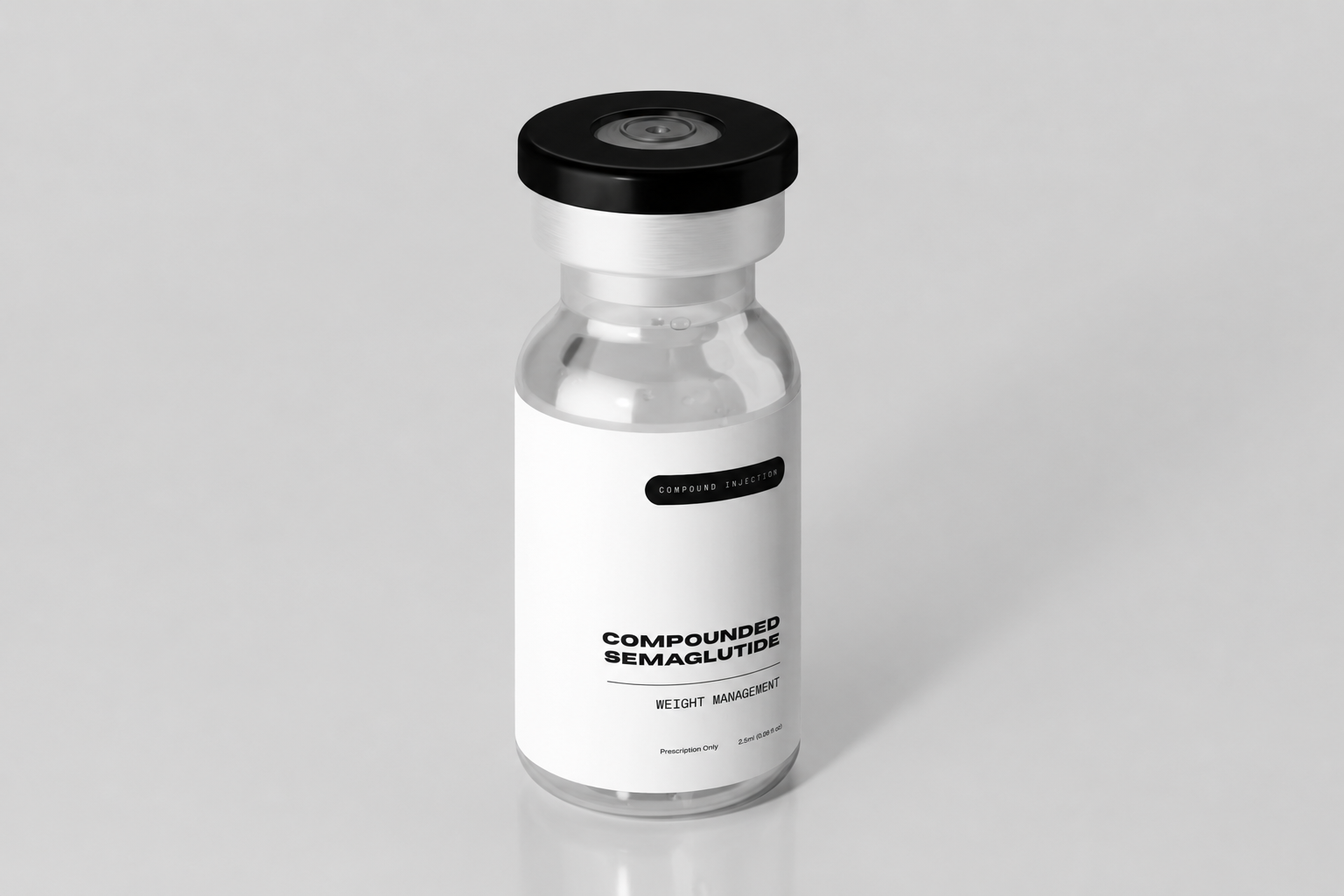
glass vial with a compounded semaglutide label
Multiple vials with black caps and text on a white background
Vial labeled &