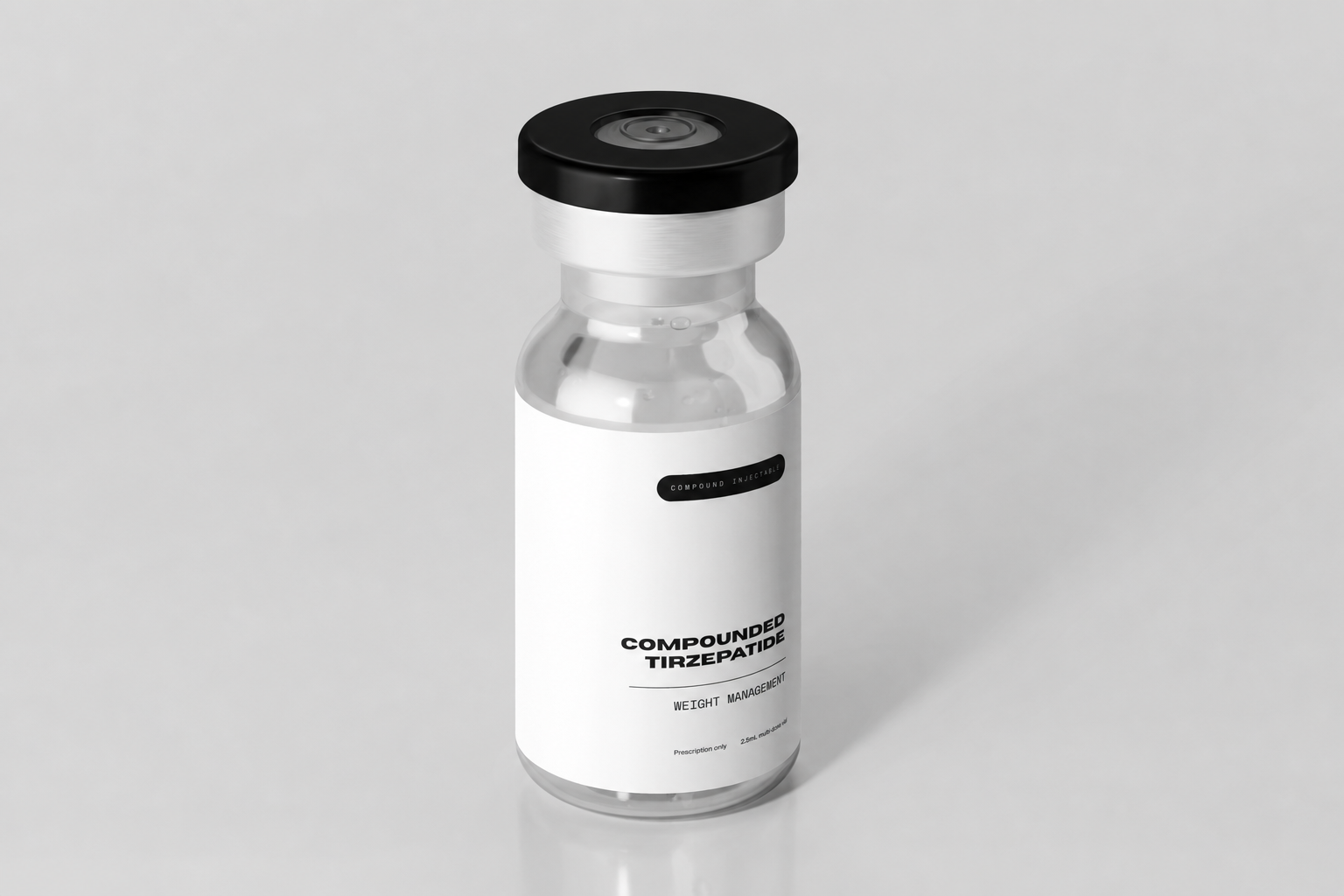

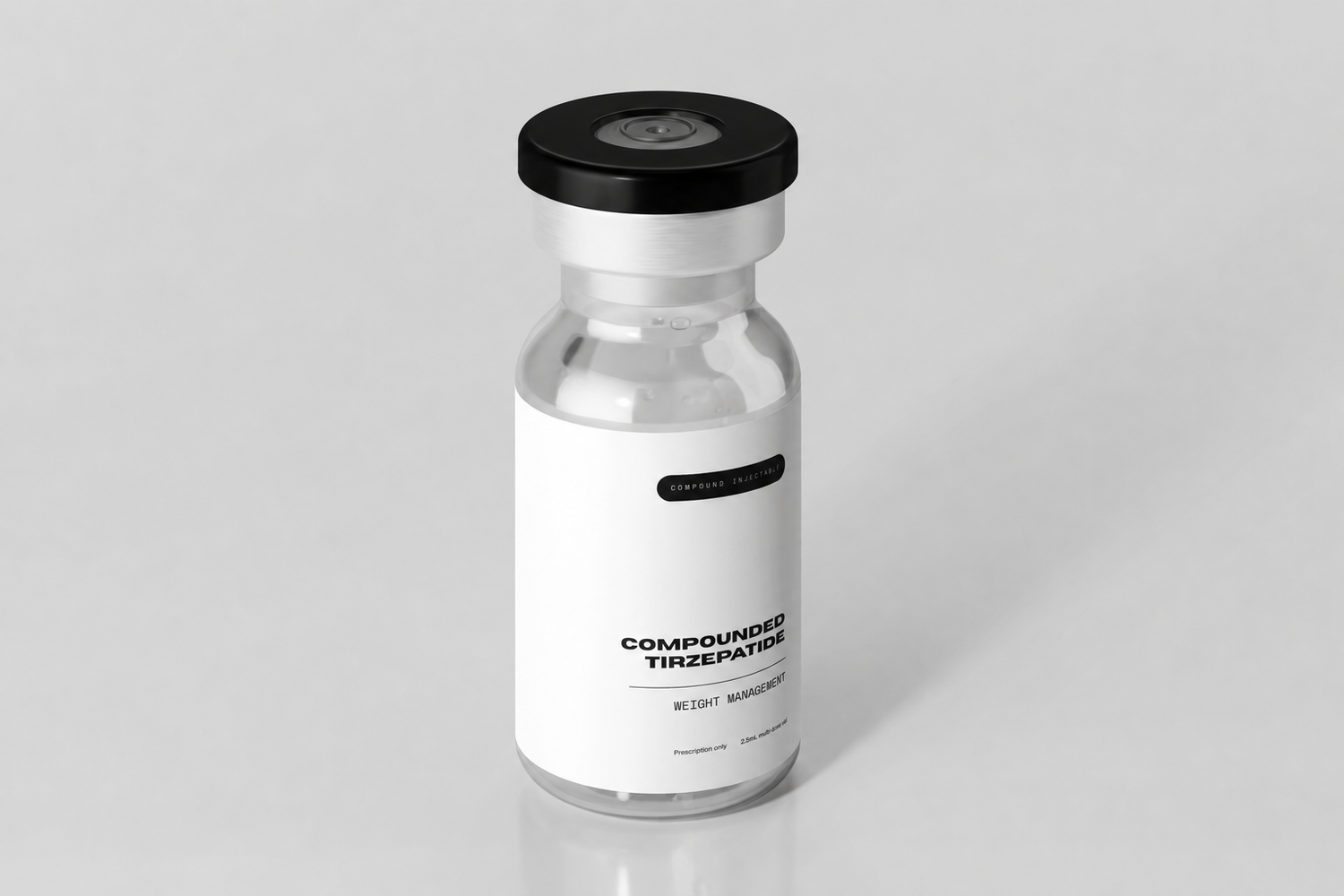
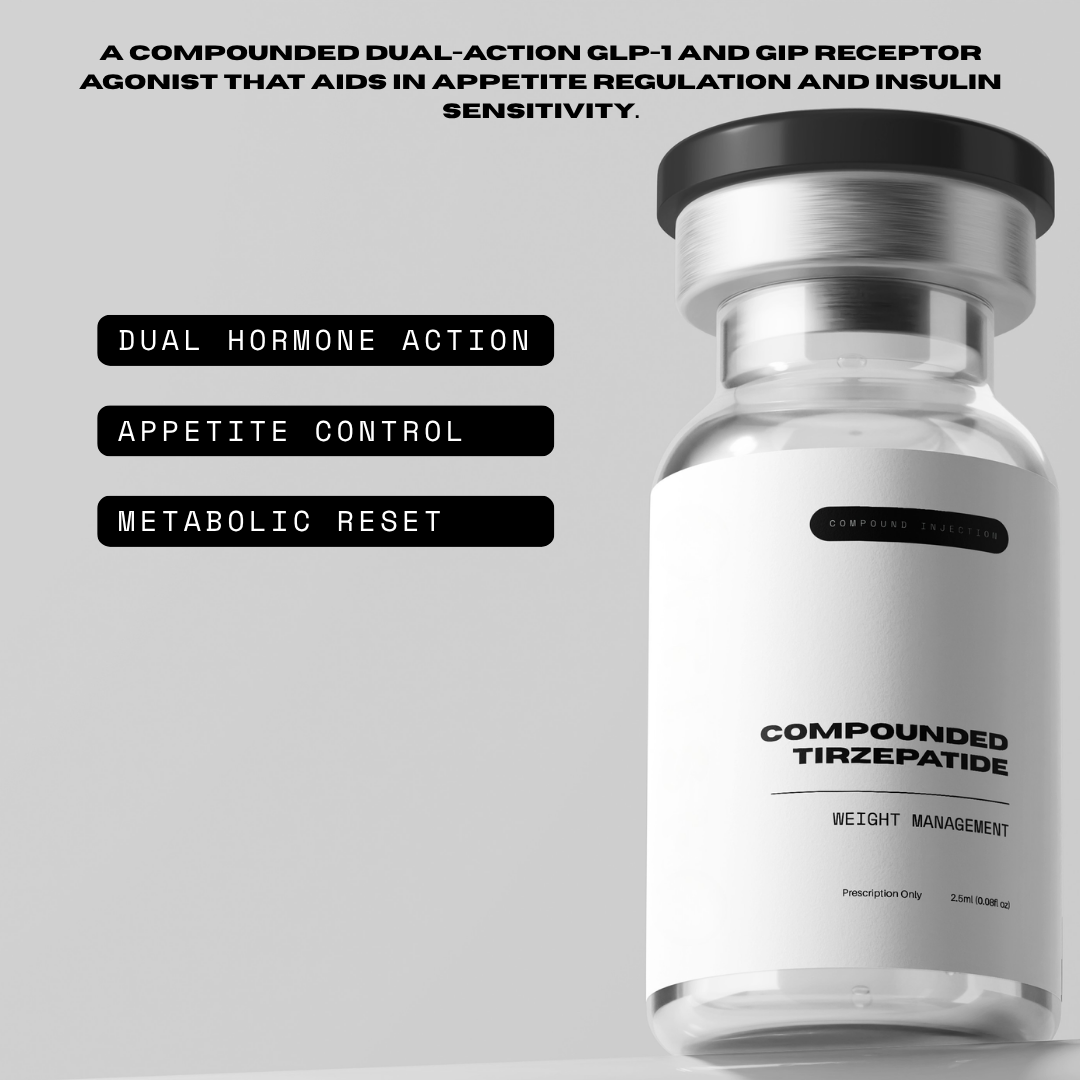
COMPOUNDED TIRZEPATIDE
- Regular price
-
$339 - Regular price
-
$0 - Sale price
-
$339

Pricing is for a monthly supply. Prescription medication. Medical evaluation required.
What is compounded tirzepatide?
Compounded tirzepatide is a dual-action GLP-1 and GIP therapy, compounded by a state-licensed pharmacy and prescribed through provider-led telehealth. Sometimes searched as "compound tirzepatide" or "tirzepatide compound," it is the same medication prepared for an individual patient by prescription. At Fitish RX it is built for women and priced flat at $339 for a monthly supply, with your provider consult and shipping included.
Tirzepatide is a dual action GLP-1 and GIP receptor agonist. It is the only medication of its kind currently used to support weight management. Most weight management medications target a single hormone pathway. Tirzepatide activates two: GLP-1, which slows digestion and helps regulate appetite, and GIP, which influences how your body responds to insulin and stores energy.
Together, these two pathways are why patients on tirzepatide often experience steadier appetite control, more consistent progress, and improved metabolic markers compared to single hormone therapies. Once weekly subcutaneous injection. Doses are gradually titrated by your provider to support tolerance.
Benefits patients commonly report
- Reduced appetite and food noise
- Steadier, more sustainable weight management when paired with diet and lifestyle changes
- Improved insulin sensitivity and blood sugar regulation
- More predictable daytime energy
- Less reactive eating and fewer cravings
A note on whole body wellness
Many patients describe broader lifestyle wins as their habits steady, including better sleep, more consistent meals, and a clearer sense of routine.
What to expect
Most patients begin to feel changes in appetite within the first 1 to 2 weeks. Visible changes in weight typically follow over 8 to 16 weeks of consistent use, supported by hydration, protein intake, and movement habits guided by your provider. When side effects occur, they are usually mild to moderate gastrointestinal symptoms (nausea, constipation, indigestion) and tend to ease as your body adjusts.
Who it's for
Adults pursuing medical weight management whose BMI and medical history meet clinical eligibility criteria. A licensed Fitish provider reviews every intake before any prescription is issued.
How Fitish RX works
Getting started takes minutes. You complete a short online intake about your health and goals. A licensed provider reviews it, and if tirzepatide is a fit, writes your prescription. Your medication ships discreetly from a licensed compounding pharmacy on a monthly cadence. From there, your care team stays with you through the patient portal for dose adjustments, questions, and ongoing support at no added cost.
Important to know
Compounded tirzepatide is prepared by a state licensed sterile compounding pharmacy. Compounded medications are not FDA-approved and do not undergo FDA review for safety, effectiveness, or manufacturing quality. FDA-approved tirzepatide products (Mounjaro®, Zepbound®) are commercially available. Your provider may recommend compounded tirzepatide where clinically appropriate based on your evaluation.
Full dose or microdose
Fitish RX offers two distinct GLP-1 lanes so you can match the program to your goal:
- Compounded tirzepatide (full dose), $339 / monthly supply. For patients pursuing serious, sustained weight management who meet clinical criteria.
- Microdose tirzepatide, $269 / monthly supply. A lower, fixed dose for those who want a gentle, mindful, cosmetic approach rather than full dose weight loss. It does not titrate up.
Both are provider led and ship monthly. If you are not sure which lane fits, complete your intake and your provider will recommend the right one.
These statements have not been evaluated by the Food and Drug Administration. Individual results vary. This product is not intended to diagnose, treat, cure, or prevent any disease.
Not a fit for compounded GLP-1? You may still qualify for our Microdosing program, a lower dose option designed for patients outside the standard BMI range. Eligibility for our compounded GLP-1 program is based on BMI and clinical criteria reviewed by a licensed provider. If your BMI falls below the threshold for compounded GLP-1, you may still be a candidate for our Microdosing program, a lower dose protocol built for patients seeking the metabolic, appetite, and longevity benefits of GLP-1 therapy at a gentler entry point. A provider will review your intake and recommend the program that fits your goals and health profile.
Want the gentle lane explained? Read our guide to microdosing tirzepatide, or compare starting doses side by side in the GLP-1 microdosing dose chart.
Frequently asked questions
What is compounded tirzepatide?
Compounded tirzepatide is tirzepatide prepared by a state licensed sterile compounding pharmacy and dispensed by prescription. Compounded medications are not FDA-approved. It is used for medically supervised weight management when a licensed provider determines it is appropriate.
Is "compound tirzepatide" the same as compounded tirzepatide?
Yes. "Compound tirzepatide" and "tirzepatide compound" are common ways people search for compounded tirzepatide, the version prepared by a state licensed compounding pharmacy by prescription. Compounded medications are not FDA-approved. A licensed provider determines whether it is appropriate for you.
Where can I get compounded tirzepatide for women?
Through Fitish RX. Complete a short online intake, a licensed provider reviews it, and if compounded tirzepatide is appropriate your prescription ships monthly from a licensed pharmacy. Pricing is flat at $339 for a monthly supply, with the consult and shipping included.
How much does compounded tirzepatide cost at Fitish?
$339 for a monthly supply. That price includes your provider consult, the medication if you are approved, and shipping. There are no separate consult or membership fees.
Do I need insurance?
No. Fitish RX is direct-pay telehealth with transparent, all-in pricing. You do not need to involve insurance.
Can I pay with my HSA or FSA?
Sometimes. Some plans and cards will go through and others will not, and that part is largely outside our control. Card networks currently treat compounded telehealth prescriptions inconsistently, so an HSA or FSA card can be declined at checkout even when your plan would otherwise allow the expense. Eligibility is determined by your plan and your plan administrator, not by us. If you want to use those funds, the most reliable route is to check with your administrator first, pay with any other card, and submit for reimbursement. Your provider can issue a Letter of Medical Necessity to support that request.
How is it taken?
Tirzepatide is a once weekly subcutaneous injection. Your provider sets your starting dose and a gradual step-up plan, personalized to you and documented in your patient portal.
What are the most common side effects?
The most commonly reported side effects are mild to moderate gastrointestinal symptoms such as nausea, constipation, and indigestion, and they usually ease as your body adjusts. Starting at a low dose and increasing slowly helps. Your provider reviews the full safety profile with you before you begin.
What if I do not qualify for full-dose tirzepatide?
You may still be a candidate for the Fitish Microdosing program, a lower dose option for patients outside the standard BMI range who want a gentler, cosmetic approach. Your provider recommends the program that fits your health profile after reviewing your intake.
New to GLP-1? Read our guide to weight loss shots and how they work.
For more detail, see The Clinic FAQ page or our Fitish RX Safety Information. The Black Box warnings, full side effect list, and drug interaction details remain in the Safety Details section below.
More
Tirzepatide is a GLP-1 and GIP receptor agonist medication. Compounded tirzepatide is custom-prepared by a state-licensed compounding pharmacy based on a prescription from a licensed provider. Compounded medications are not FDA-approved and are not reviewed by the FDA for safety, effectiveness, or quality. State-licensed compounding pharmacies follow both federal and state regulations, including quality standards.
FAQ
Safety Details