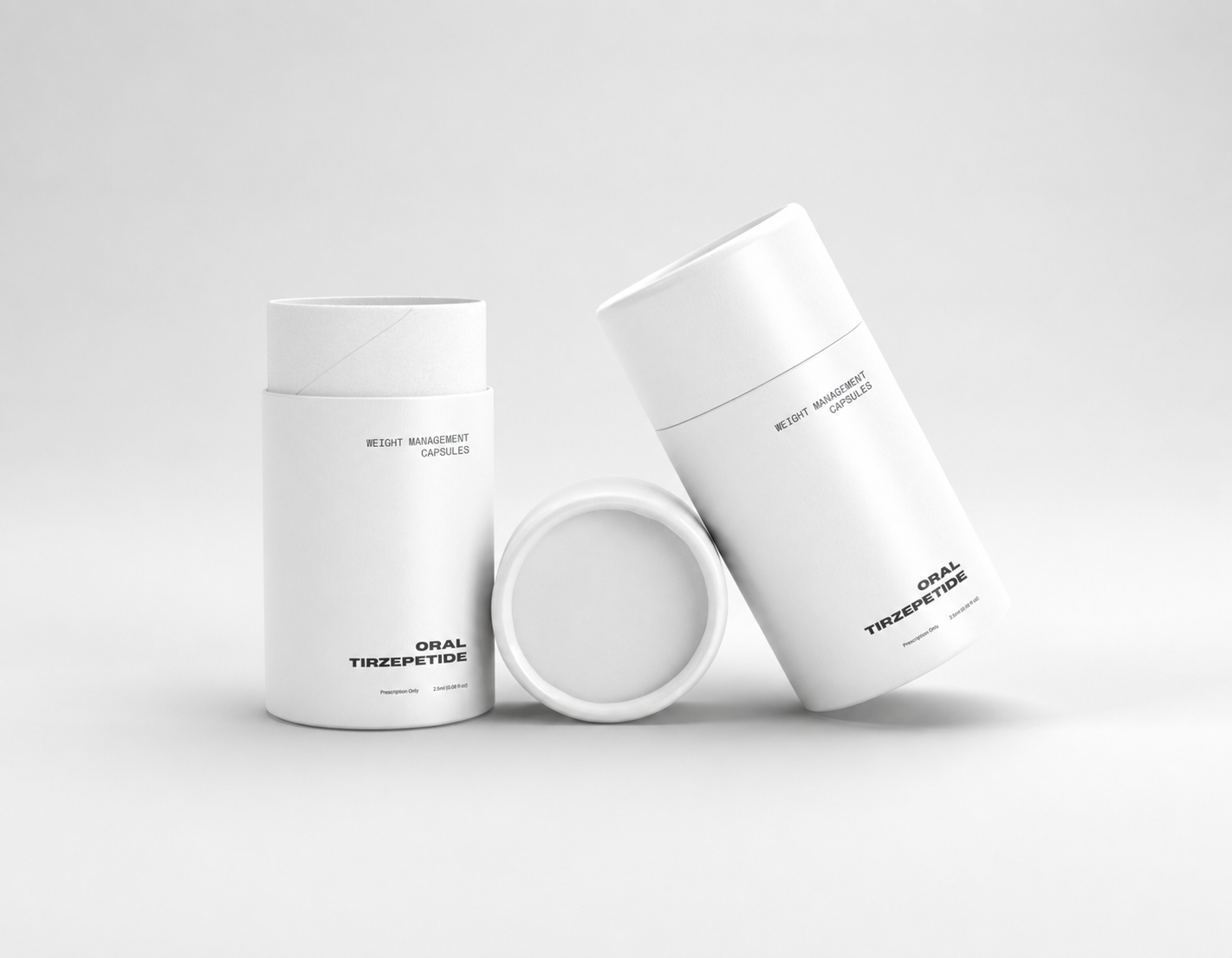


ORAL TIRZEPATIDE TABLETS
- Regular price
-
$339 - Regular price
-
$0 - Sale price
-
$339

Pricing is for a monthly supply (4 weeks). Prescription medication. Medical evaluation required.
What it is
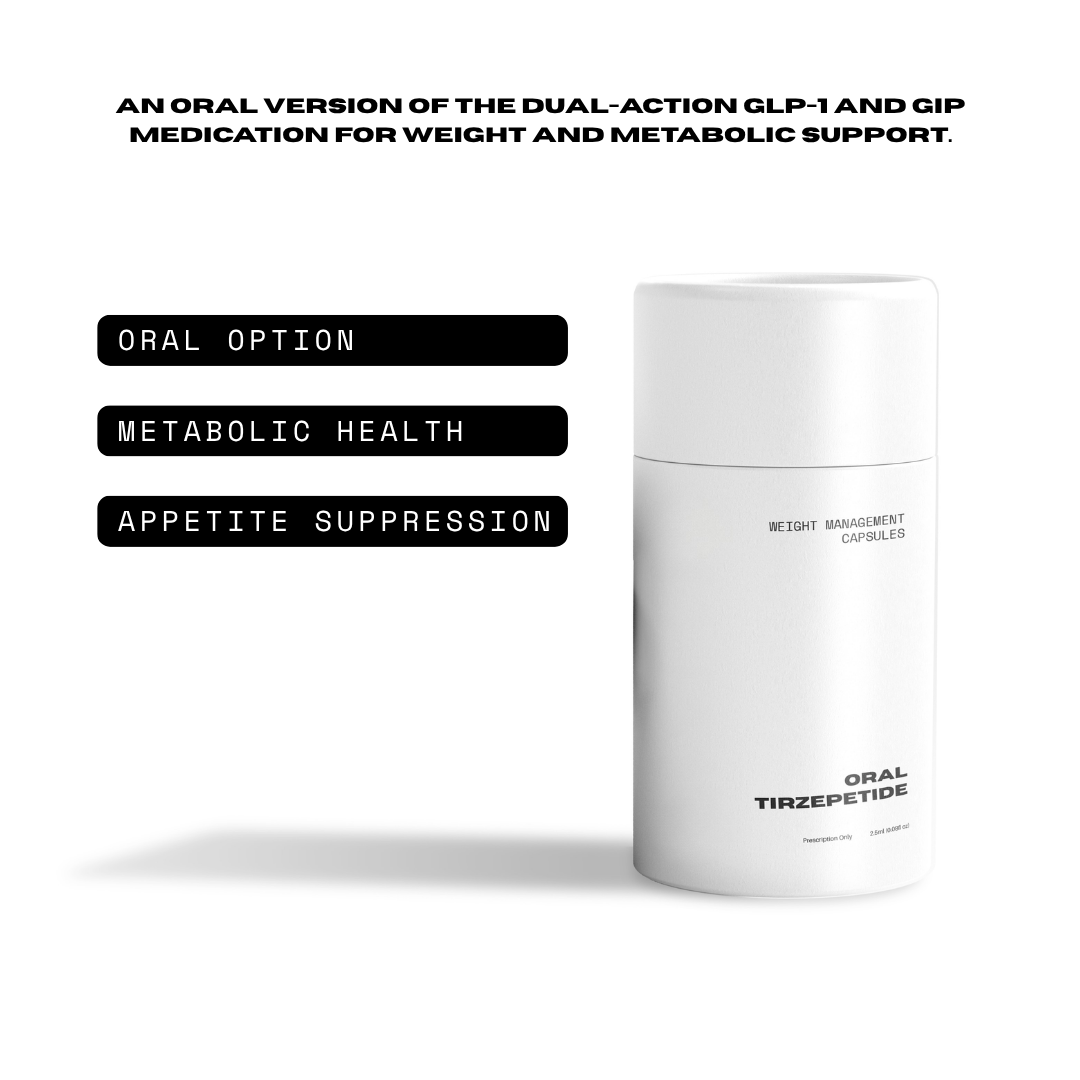
Tirzepatide made simple: a daily oral tablet, no injections. Provider-prescribed GLP-1 support for your weight goals, shipped to your door by Fitish RX. Tirzepatide activates two appetite and metabolism regulating pathways: GLP-1 to slow digestion and reduce hunger, and GIP to support insulin response and energy use.
At Fitish RX, tirzepatide pills are a daily oral tablet taken by mouth, a needle-free alternative to the once-weekly injection.
For patients who prefer to skip injections, who travel often, dislike needles, or want a more discreet routine, the oral tablet form provides a daily dosing option with the same active mechanism. Taken once daily, ideally on an empty stomach with a small amount of water.
Prefer the standard once-weekly injection? See our compounded tirzepatide program.
Benefits patients commonly report
- Reduced appetite and food noise
- Steady, sustainable weight management when paired with diet and movement
- Improved insulin sensitivity and glucose stability
- No injections required
- Predictable daily routine that integrates easily into travel, work, and life
A note on whole body wellness
A more steady appetite, better hydration, and the lifestyle changes that often come with this protocol can show up in skin clarity, sleep quality, and overall energy.
What to expect
Appetite shifts typically begin within the first 1 to 2 weeks. Weight progress usually becomes visible over 8 to 16 weeks of consistent daily use. Oral tirzepatide may take slightly longer to reach peak effect than injectable forms. Side effects, when they occur, are usually mild gastrointestinal symptoms that ease over time.
Who it's for
Adults pursuing medical weight management who prefer an oral option and meet clinical eligibility criteria. A licensed provider reviews every intake.
Important to know
Compounded oral tirzepatide is prepared by a state licensed compounding pharmacy. Compounded medications are not FDA-approved and do not undergo FDA review for safety, effectiveness, or manufacturing quality. There is currently no FDA-approved oral tirzepatide product on the market. FDA-approved tirzepatide is available only as an injection (Mounjaro®, Zepbound®). Your provider may recommend compounded oral tirzepatide where clinically appropriate based on your evaluation.
These statements have not been evaluated by the Food and Drug Administration. Individual results vary. This product is not intended to diagnose, treat, cure, or prevent any disease.
Tirzepatide tablets for weight support
Fitish offers tirzepatide in an oral tablet, an option some people prefer over injections. As part of a provider-prescribed program, tirzepatide supports weight and metabolic goals alongside the everyday habits that keep you feeling good. Your provider helps you find the approach that fits, whether that is a full-dose program or a gentler starting point.
How to get tirzepatide online with Fitish
Getting started with Fitish is simple. You complete a short online health intake, a licensed provider reviews it, and if tirzepatide is a good fit, your prescription is sent to a compounding pharmacy and shipped to your door. No waiting rooms and no in-person visit. You can message your care team any time along the way.
New to GLP-1? Read our guide to weight loss shots and how they work.
Not a fit for compounded GLP-1? You may still qualify for our Microdosing program, a lower dose option designed for patients outside the standard BMI range. Eligibility for our compounded GLP-1 program is based on BMI and clinical criteria reviewed by a licensed provider. If your BMI falls below the threshold for compounded GLP-1, you may still be a candidate for our Microdosing program, a lower dose protocol built for patients seeking the metabolic, appetite, and longevity benefits of GLP-1 therapy at a gentler entry point. A provider will review your intake and recommend the program that fits your goals and health profile.
Want the gentle lane explained? Read our guide to microdosing tirzepatide, or compare starting doses side by side in the GLP-1 microdosing dose chart.
Frequently asked questions
Can I get tirzepatide online?
Yes. With Fitish you complete an online health intake, a licensed provider reviews it, and if appropriate your tirzepatide prescription is filled by a compounding pharmacy and shipped to you.
Do I need a prescription?
Yes. Tirzepatide is prescription-only. A licensed provider reviews your intake and determines whether it is right for you.
Does tirzepatide come in a pill form?
Yes. Fitish RX offers tirzepatide pills as a daily oral tablet, a needle-free alternative to the weekly injection. There is currently no FDA-approved tirzepatide pill; FDA-approved tirzepatide is available only as an injection. Compounded oral tirzepatide is prepared by a state licensed compounding pharmacy and is not FDA-approved.
Is there an FDA-approved oral tirzepatide?
No. There is currently no FDA-approved oral tirzepatide product. FDA-approved tirzepatide is available only as an injection. Compounded oral tirzepatide is prepared by a state licensed compounding pharmacy and is not FDA-approved.
How does tirzepatide support weight goals?
Prescribed as part of a provider-guided program, tirzepatide supports weight and metabolic goals. Your provider tailors the plan to you and adjusts it over time.
How is oral tirzepatide taken?
Once daily, ideally on an empty stomach with a small amount of water. Your provider confirms your dose and timing in your patient portal.
How is it different from the injection?
It uses the same active mechanism in a daily needle-free tablet. Oral tirzepatide may take slightly longer to reach peak effect than the injectable form.
How much does it cost?
$339 for a monthly supply (4 weeks), including your provider consult, the medication if approved, and shipping.
Can I pay with my HSA or FSA?
Sometimes. Some plans and cards will go through and others will not, and that part is largely outside our control. Card networks currently treat compounded telehealth prescriptions inconsistently, so an HSA or FSA card can be declined at checkout even when your plan would otherwise allow the expense. Eligibility is determined by your plan and your plan administrator, not by us. If you want to use those funds, the most reliable route is to check with your administrator first, pay with any other card, and submit for reimbursement. Your provider can issue a Letter of Medical Necessity to support that request.
What are the most common side effects?
Usually mild gastrointestinal symptoms that ease over time. Your provider reviews the full safety profile with you before you begin.
For more detail, see The Clinic FAQ page or our Fitish RX Safety Information. The Black Box warnings, full side effect list, and drug interaction details remain in the Safety Details section below.
More
Tirzepatide is a GLP-1 and GIP receptor agonist medication. Compounded tirzepatide is custom-prepared by a state-licensed compounding pharmacy based on a prescription from a licensed provider. Compounded medications are not FDA-approved and are not reviewed by the FDA for safety, effectiveness, or quality. State-licensed compounding pharmacies follow both federal and state regulations, including quality standards.
FAQ
Safety Details